53. Interview with Michael Rae Khoury, investigative journalist and the researcher behind the Ericsson report. Unedited version with our conversation about the Wallenberg family and their leverage. How they funded and sponsored ISIS for +17 years and are in control of 911 in 25 countries.
51. Does the Swedish state jointly own companies such as Telia Sonera in order to be able to loot state coffers and is that the real reason why Turkey is a bit angry with Sweden or is it about the myth of the dog turkey that Sweden has cultivated since the 18th century? Are taxes, sponsorships and charities in fact money laundering and money laundering? How would the deep state describe the deep state if it exists?
who holds a Wallenberg professorship. Magda sat in the WEF, IMF and represents nothing but a corrupt political backstage…
So anyone who thinks Klaus Schwabb controls anything in the WEF World Economic Forum is mistaken!
Adolf Lundin was the son of the chemist Harry Lundin and the brother of the head of KSI, Bertil Lundin.[2] His mother Maria Lundin, née von Wagner, was born into a German-speaking family in Odessa. His uncle Willy von Wagner died in 1943 on behalf of Germany during the occupation of Norway.[3] He was married to Eva Lundin, née Wehtje, who belonged to the family that controlled Skånska Cement; her sister was married to Marc Wallenberg. Lundin was the father of Ian H. Lundin and Lukas H. Lundin. At the end of 1950 he searched in vain for oil in Colombia for Shell. Through his father-in-law Walter Wehtje, he got a job in the early 1960s at Ax:son Johnson-owned Nynäs Petroleum.
The text that is marked translates to "Less known is that he founded the world economic forum, that today plays a big role in geopolitics comparable to the UN."
Sweden is a small country but very sharp. Wallenberg is the core of the deep state, the shadow government or non-elected people who rule in the background or whatever you want to call it. Whose motto is Esse Non Videri, act without being seen. They control the telecom infrastructure, telephony, broadband, 5G, etc. through Ericsson and the power supply through ABB in 184 countries, they control Nasdaq and the technology for 150 stock exchanges. They control SEB for banking, Astra Zeneca which makes vaccines, Atlas Copco which deals with mines and extraction of natural resources, SAAB which makes weapons, fighter planes, Redbee which has over 400 TV stations incl. BBC etc etc. All tech companies such as Apple, Google, Amazon, Facebook, Twitter, Microsoft, etc. have their server halls in Sweden and pay license fees to Wallenberg in order to be on the internet, thus Wallenberg has great control over their operations. In addition to this, which is also shown in the feature that finances them research, education, legal education, training in weapons, democratic issues, etc., etc. The list can be made long and this family is undoubtedly the most influential on earth. When Trump said he would “drain the swamp”, he meant it. The fungus that sucked out all the nutrition, all the liquid, all the wealth from the rest of the peoples on earth. With each passing day we see the decay and operating without being seen doesn’t really work for them. Now the whole world sees how this ecosystem that Wallenberg built works and who benefits. They are behind the Federal Reserve Act, the Bilderberg group where Wallenberg is still chairman (there is interesting documentation on Wikileaks) and the EU. Intelligence services are controlled by Ericsson, eavesdropping goes through them and thus also the Darknet, which they could have easily shut down if they wanted to. Sweden (or Wallenberg which is Sweden) is the sixth eye in Five Eyes, only that they have control over everything without being involved. Wallenberg is the invisible enemy and the people in the shadows that Trump talks about. Sweden is neither neutral, nor a small country, and definitely not a humanitarian superpower. The suffering, poverty and misery that this family has caused the whole world is indescribable and everything is coming out now in the light of reality and we will be ashamed as Swedes. Which party or politician sheds light on this, no, no one, because they are appointed by the same family and no one can become a politician without Wallenberg’s approval. So no, we haven’t had democracy either. Their time is over now!
"My involvement as a member of the Shanghai Mayor's International Council for 25 years, and the corresponding involvement in Tsinghua University's International Council, gives me insights and contact points to Chinese society that give me the opportunity to express views on how trade and other exchanges should be conducted. We in the family believe in keeping the dialogue open and straight."
"Wallenberg on China: "Nothing to gain from confrontation" On Monday, October 21 this year – just a day after thousands of protesters clashed with police in Hong Kong in yet another showdown – Jacob Wallenberg sat down in a beige, throne-like armchair in a room in Shanghai. Next to him was another man in a suit in a similar chair.
The whole thing resembled a summit meeting between two world leaders.
Which it, in its way, was.
The man is not just anyone. His name is Li Qiang, he is the secretary of the Communist Party in Shanghai. As a member of the party's 25-member Politburo, the party's governing body, he is one of the most powerful men in all of China.
The American Maurice R Greenberg, former head of the American insurance giant AIG, was also present at the meeting.
The event is in the picture. It is published on the online edition of the state-owned daily newspaper Shanghai Daily together with a short summary:
"Li thanked the two guests for their participation in the creation of IBLAC and their valuable advice and suggestions for Shanghai's social and economic development."
IBLAC stands for International Business Leaders Advisory Council and is a council of global business leaders linked to the mayor of Shanghai. Jacob Wallenberg and Maurice Greenberg were in town for the council's annual meeting. Which was also the reason for the meeting with Li Qiang.
It is not unusual for Jacob Wallenberg to meet a person from China's top management. Wallenberg has been a member of IBLAC for many years, and was also its chairman for a period.
Contacts with high-level Chinese political leaders have been important for many larger companies that have operated in China over the years, says Kristina Sandklef, senior China advisor at the consulting firm Consilio International.
– In general, it is useful to have political contacts when conducting business in China. It makes life easier in every way. It can be enough to have a picture in the reception with a representative from your own company together with a local leader of the Communist Party, so that visitors know you have contacts, says Kristina Sandklef.
According to Oscar Almén, researcher and China expert at Total Defense's research institute FOI, the role of politics in Chinese business life has increased in recent years.
– Considering that politics is so present in China's closed system, and has become even more present during Xi Jinping's time in power, it is clear that political contacts are generally good for foreign companies to have, says Oscar Almén, who also recently published a review of Chinese company purchases in Sweden.
Exactly how the Wallenberg family's political connections have helped the group's companies is difficult to determine. Clearly, China today is of enormous importance to the Wallenberg group and its companies, and has been so for several years. In 2018 alone, six of the Wallenberg group's largest industrial companies had revenues in China of over SEK 130 billion, according to SvD's calculations. That is 80 percent more than the same six companies brought in from China in 2010.
These are listed companies that are owned in several stages, via the listed management company Investor and the unlisted FAM, which in turn is owned and controlled by the Wallenberg foundations. FAM and Investor own shares with large voting rights, which give the family and its representatives a leading position in the companies.
For several of the companies, China is today the second largest market.
In the workshop giant Atlas Copco, Chinese customers accounted for 18 percent of sales last year. In ABB, the same figure was 15 percent. In the ball bearing manufacturer SKF, 16 percent.
This can be compared with the share of Sweden's exports to China, which in 2018 was 4.7 percent. Admittedly, the mentioned companies are global and China represents the equivalent of 19 percent of the world economy, calculated as GDP. But it is still clear that China is a far more important market for the Wallenberg family's company than for several other Swedish global companies. For example, the China share of Sandvik's sales was only 7 percent and of Assa Abloy's 6 percent.
This hospital visit subsequently happened to create a special bond between me and Jiang Zemin.
Should China's latest threat, as formulated by ambassador Gui Congyou last week in an interview with Göteborgs-Posten, to "restrict exchange and cooperation in economics and trade" with Sweden become serious, it could have major consequences for the Wallenberg group's companies. And thus for the Swedish shareholders and pension savers who have money invested in the companies.
Swedish occupational pension companies, for example, have tens of billions invested in the Wallenberg group, and are thus dependent on the income from China. In Investor alone, the civil servants' Alecta and the labor movement's AMF are second and third on the list of largest owners after the Wallenberg foundations. Alecta's pensioners today own Investor shares worth SEK 23.6 billion, and AMF's pensioners and fund unit owners SEK 17.7 billion, according to the ownership service Holdings.
Peter Wallenberg receives President Hu Jintao during his visit to Sweden in the summer of 2007. Erik Belfrage, Hans Stråberg, Carl-Henric Svanberg, Peter Wallenberg Jr, Marcus Wallenberg and Jacob Wallenberg sit along the wall.
The Wallenberg family's financial contacts with China go back a long way. Jacob's father Peter Wallenberg has told in the newspaper "Företagsminnen" that he visited China already at the end of the 1970s, in connection with Deng Xiaoping becoming leader and initiating the economic reform program that today – four decades later – has made China the world's second largest economy.
Peter Wallenberg was then able to establish personal relationships with China's absolute top echelon. During a trip in the country, he was invited to dinner by the then mayor of Shanghai, Jiang Zemin. At dinner, Peter Wallenberg mistakenly thought he had a heart attack and was taken to hospital.
"This hospital visit then happened to create a special bond between me and Jiang Zemin, after all, he had helped save my life. 'What about your old heart?', he jokingly asked when we met again," said Peter Wallenberg to Företagsminnen.
When Jiang Zemin succeeded Deng Xiaoping as leader in 1989, the Wallenberg family was thus in direct contact with the top. The relationship continued when Hu Jintao then took over power in 2002. When Hu Jintao visited Stockholm in the summer of 2007, Peter Wallenberg was one of those who received the president.
There is much evidence that the close relations have remained close even after 2012, when Xi Jinping became president. The Li Qiang whom Jacob Wallenberg met the other month is, according to the South China Morning Post, close to Xi Jinping. According to the newspaper, Li Qiang is one of Xi Jinping's allies from Zhejiang province. According to the newspaper, Li Qiang was Xi Jinping's secretary for three years, when he was the leader of the Communist Party in Zhejiang.
Li Qiang's representative in Shanghai, Han Zheng, is another of the party leaders with whom Jacob Wallenberg has had contact over the years. And Han Zheng is not just anyone. Today, he is one of seven members of the Politburo's innermost circle, Xi Jinping's so-called "standing committee". It is Han Zheng who can be seen in the picture next to Jacob Wallenberg, at a press conference in 2011.
Jacob Wallenberg with Han Zheng in 2011, when Han Zheng was mayor of Shanghai. Today, he is one of seven in the inner circle of the Communist Party's Politburo, its so-called "standing committee" led by President Xi Jinping.
In parallel with the Wallenberg family cultivating its political relationships, the group's companies have built up a considerable presence on the ground in China. Today, the country is not only an important market for the group. Several of the companies have large production facilities in the country. SKF today, for example, has nine Chinese factories that are subcontractors to the automotive industry. China is also the country where SKF has the most employees in the world.
We have also seen before that this type of threat is a way of showing domestic politics that you dare to stand up to Western states.
ABB is another Wallenberg giant with a large Chinese presence. In November 2018, the group inaugurated a manufacturing and development center in Xiamen, which when completed will be the group's largest innovation and manufacturing facility with 3,500 employees, a total investment of approximately SEK 3 billion. In 2018, ABB also decided to build a new robot factory in Shanghai.
The Wallenberg companies also usually cooperate on networks and political contacts worldwide. Johan Forssell, CEO of the group's investment company Investor, confirmed as recently as the other week that it is very much continuing. According to Forssell, one of the most important things Investor can contribute to the companies is the network in Asia, and especially in China.
Admittedly, several of the above-mentioned companies are not entirely Swedish. ABB, Astra Zeneca and Stora Enso even have headquarters abroad. But given how well-known the Wallenbergs are in China, it is probably obvious to the authorities in the country that the family is its largest owner. And that the companies could be affected by an economic conflict.
According to Oscar Almén, researcher at FOI, the consequences depend on which means China chooses to respond with.
– If they choose the trade route, with tariffs and the like, then the issue ends up in the EU, which regulates Swedish trade relations. Then there are ways to make it more unofficial, where Swedish companies in China can be affected in a number of other ways, says Oscar Almén.
– You can compare it to what happened to the salmon after the conflict with Norway. Sanitary tests for imported salmon became stricter and the possibility of obtaining import licenses became more difficult. However, it was not the Chinese government that officially implemented this. Through small means, it could produce big effects, he says.
According to Oscar Almén, however, it is not certain that China will actually go ahead with its threat.
– China must make a calculation of how costly it can be, the country is also dependent on several of the companies that operate in the country. We have also seen in the past that this kind of threat is a way to show domestic politics that you dare to stand up to Western states and it also works as a way to scare others not to challenge China in the future.
The Wallenberg family has repeatedly had to answer for their close connections to China and how that rhymes with the country's problems with human rights. All along, the family has defended itself by saying that their presence contributes to economic development and thus strengthens the direction towards democracy.
Like, for example, Jacob Wallenberg in Ekot's Saturday interview in 2006:
"It has been an incredible development thanks to the fact that you actually approve of economic development. And then I think the democratic development also follows. Or, rather, I don't think so. I am completely convinced that it is so."
That increased wealth in China would lead to increased democracy is an argument that is becoming increasingly difficult to assert.
The question is even more relevant today. Several politicians and human rights organizations are clear in their conclusion that under Xi Jinping in power, China has taken several steps in a more repressive, less democratic direction.
As Human Right Watch begins its latest report on the situation in the country.
"President Xi Jinping, born in 1953, has indicated his intention to rule indefinitely after China's legislature in March added an amendment to the constitution aimed at abolishing the outer term limit for the presidency. This move was also characteristic of the increasing repression."
Oscar Almén at FOI is skeptical of the belief that economic development would also improve the situation for human rights.
– That increased wealth in China would lead to increased democracy is an argument that is becoming increasingly difficult to assert. Today, China is moving more and more towards an autocratic system, on all levels, with reduced freedoms and increased political control, he says, but points out that there are occasional exceptions that go in the opposite direction.
– The opportunity for individual citizens to sue the state has increased in recent years and we have also seen more people who have taken advantage of that opportunity. That's important to remember, even if the overall trend is toward more political control.
Several recent events have also strengthened the thesis that the regime in Beijing is moving in a more repressive direction. One example is the repeated revelations of China's treatment of minorities in Xinjiang province, where over a million people have been put in various camps and prisons.
Representatives of the Chinese regime have described the camps primarily as schools, where the inmates were students. But as several international media and organizations have shown, it is rather about far more brutal institutions where anyone who resists is punished. The New York Times recently revealed that the hard-line measures were ordered from China's top political leadership. In a speech to party representatives, President Xi Jinping is said to have demanded that "no mercy" should be shown to the Muslim minority population and that the country used all the "tools of dictatorship" in that work.
The development in Hong Kong is another current example. The authorities' treatment of the protesters and the bill they were protesting are both seen as examples of a more hardline approach by the central government in Beijing.
For Sweden, the imprisonment of the Swedish-Chinese publisher Gui Minhai has turned up the criticism against the methods of the Chinese state power. Which is now the background to Ambassador Gui Congyou's threat in the GP the other day about "countermeasures". When and how these will be put into practice is still unclear. Foreign Minister Ann Linde told Ekot after the statement that the Foreign Ministry "did not receive any concrete information about this from Beijing" via the normal channels.
In the GP interview, Gui Congyou repeats the response that China often uses when people or organizations in other countries criticize the government's actions and policies:
"The policies of the Chinese government are China's internal affairs. No countries, organizations or private individuals have the right to interfere," he says in the interview.
SvD has asked Jacob Wallenberg a number of specific questions about how he views the group's activities in China today and the family's contacts with the country's political leadership. Jacob Wallenberg did not want to answer the questions directly, but instead formulated a written statement to SvD.
In the statement, he writes that the family generally "has a strong belief that trade and openness favors economic development and creates conditions for increased prosperity for all and also contributes to peaceful coexistence between countries. This also applies to China.".
Jacob Wallenberg emphasizes, however, that the country's expansion is not viewed uncritically.
"China's economic growth and ambition do not mean that one should be naive about the political role China wishes to play, and therefore it is important to place the same demands on China in terms of trade and competition as are placed on other developed countries. It must be a level playing field."
Jacob Wallenberg writes that he has spoken on several occasions with China's leaders about the country's problems with human rights. But he also repeats his previously expressed belief that with economic development should also come increased civil liberties and rights in the long run.
"That this has not yet happened in China, I regret, which I have also repeatedly and clearly raised with Chinese leaders. But politics – not business – should deal with political issues. I believe that increased transparency and openness is a prerequisite for continued long-term economic development in China."
In the statement, however, Jacob Wallenberg mentions nothing about any specific issues that he has discussed with the Chinese leaders he met, such as the issue of the imprisoned Swedish-Chinese publisher Gui Minhai and the prison camps in Xinjiang. Nor if he believes that the threats from the Chinese ambassador can affect the Wallenberg companies' large presence in China.
"The relationship with China is complicated. I advocate dialogue and long-termism, continued trade and exchange at all levels. We have nothing to gain from confrontation, but we must stand up for our values and use our trusted contact points to highlight our concerns and common challenges."
Jacob Wallenberg writes that they will continue to cultivate contacts with the Chinese leaders in the future.
"Since the opening of China, the family has strived for close relations with the political leadership in China. Hopefully, this has benefited the companies' opportunities to establish themselves and grow in the Chinese market," writes Jacob Wallenberg.
Nor does he harbor any thoughts of quitting as a member of IBLAC in Shanghai, where he meets Politburo members such as Li Qiang and Han Zheng.
"My involvement as a member of the Shanghai Mayor's International Council for 25 years, and the corresponding involvement in Tsinghua University's International Council, gives me insights and contact points to Chinese society that give me the opportunity to express views on how trade and other exchanges should be conducted. We in the family believe in keeping the dialogue open and straight."
The Swedish Kings of Cyberwar is an article written by Hugh Eakin that was published in The New York Review of Books on January 19, 2017 – ONE DAY before Donald Trump's inauguration. Original article: https://www.nybooks.com/articles/2017/01/19/the-swedish-kings-of-cyberwar/
Swedish version produced by Cornelia unfiltered Video production: Socrates XVII Narrator: Cornelia Gustafzon
The article in Swedish translated by Anna Iversen in PDF format:
Hugh Eakin On April 24, 2013, just weeks before Edward Snowden went public with his leaks about mass surveillance by the National Security Agency (NSA), welcomed General Keith B. Alexander, then head of the NSA, a group of Swedish intelligence officers to a secret three-day meeting at the NSA- headquarters at Fort Meade, Maryland. The delegation included Ingvar Åkesson, long-time head of Sveriges Försvarets radioanstalt (known as FRA), a shadowy Swedish state intelligence service, and five members of Åkesson's senior staff. One of the aims of the meeting was to discuss Sweden's rise importance to the NSA. In a law from 2008, FRA had been given extended powers by the Swedish government to vacuum up all communication that travels over fiber optic networks to and from Sweden – including e-mail, text messages and phone calls. This was of great interest to the NSA, not least because a large proportion of the Russian communication went via Sweden. In 2011, the Swedes began sharing their surveillance data with the NSA, which included—as NSA officials described it at the time of the meeting—a "unique collection [of communications data] on high-priority Russian targets such as leadership, domestic policy and energy." NSA officials noted the Swedish spy agency's unusual technical capabilities and reputation for secrecy and also saw it as an ideal collaborator on its hacking and cyber warfare project, called Quantum. One of the Quantum programs was an ambitious operation called WINTERLIGHT, which aimed to covertly hack into high-value foreign computers and computer networks to obtain not only communications data but also any information stored on the hard drives or servers in question. Possible targets could be administrators of foreign computer networks, ministries, oil, defense and others large corporations, as well as suspected terrorist groups or other designated individuals. Similar Quantum- operations have targeted OPEC headquarters in Vienna, as well as Belgacom, a Belgian telecoms company whose clients include the European Commission and the European Parliament. According to NSA documents, WINTERLIGHT used a complex attack strategy to secretly implant a malicious program on the target computer or network that was affected. NSA malware would then divert all signals between these computers and the Internet via "rogue" high-speed surveillance servers, called "FoxAcid" servers, which allowed the NSA to covertly gain access to almost all of the user's personal data – and even manipulate data such as was transferred from one user to another. The consequences for both espionage and offensive cyber operations were extensive. Wired has described how the attack on the Belgian telecoms sector could [map] the digital traces of selected workers, identify the IP [internet protocol] addresses of work and personal computers as well as Skype, Gmail and social network accounts such as Facebook and LinkedIn. Then they created fake pages, hosted on FoxAcid servers, to impersonate one, for example employee's legitimate LinkedIn profile page. [text under foto: President Barack Obama med dåvarande Sveriges utrikesminister Carl Bildt på Stockholm Arlanda Flygplats, september 2013. Vid en gemensam presskonferens samma dag med dåvarande statsminister Fredrik Reinfeldt diskuterade Obama NSA:s övervakning.]
Interestingly, WINTERLIGHT was a joint operation between the NSA, the Swedish FRA and the British GCHQ, but it appears that hacker attacks against computers and computer networks have been initiated by the Swedes. The FRA set up the implants on targeted computers – known in NSA parlance as 'tipping' – to redirect their signals to the surveillance servers, allowing GCHQ and the NSA to access their data in what are known as 'shots'. At the time of the April 2013 meeting, the NSA reported that "last month we received a message from our Swedish partner that GCHQ received FRA QUANTUM tips that led to 100 shots."
Then the extraordinary revelations that the Russian government was trying to influence the American the 2016 presidential election with information hacked from the computers of the Democratic National Committee and senior Democratic officials, cybersecurity has become an urgent national priority. As US officials point out, the DNC hack is just the latest in an accelerating series of Russia-linked cyberattacks targeted political and other institutions in the West, including it Estonian Government and Media 2007, German Federal Government (Bundestag) 2015, Ukraine's Power Grid 2015 and Swedish media in March 2016. Much less noted, however, has been the extent to which the US itself has coordinated with Sweden and other allies to develop hacking and surveillance tools far more advanced than the email "phishing" strategies used in recent Russian attacks. An important target for this technology is Russia itself. NSA officials describe their Swedish counterparts as “extremely competent, technologically innovative and reliable" and praised them for being "skilled at collecting a variety of communications." Notably, the Swedish FRA had gained access to the NSA's most powerful analysis tool, called XKeyscore, which, according to the NSA document, makes it possible to retrieve "almost everything a user does on the Internet" from mass surveillance data.
The NSA further noted in its April 2013 report that the FRA “continues to access more data from additional telecommunications companies" and that new Swedish legislation had also given the FRA expanded powers to fight terrorism. According to the US agency, the FRA's wide leeway had done Sweden to a more reliable surveillance ally than the UK. A document on the NSA's WINTERLIGHT program reports that "continued GCHQ involvement may be at risk due to UK legal/policy constraints, and in fact the NSA's aim all along has been … a bilateral agreement with the Swedish partner."
In early June 2013, less than six weeks after the Swedish delegation visited Fort Meade, the first reports of NSA spying based on the Edward Snowden leaks were published in The Guardian and The Washington Post. In the following weeks and months, the Snowdens triggered revelations about the NSA's global surveillance efforts, and in particular its program of mass collection of data, called PRISM, a protracted debate in the United States and finally led Congress to implement new ones restrictions on the NSA in 2015. Similar scrutiny was carried out by Britain's GCHQ and its own program called TEMPORA, which aimed to tap directly into the transatlantic fiber optic cables to intercept what The Guardian described as "vast amounts of global emails, Facebook posts, internet history and conversations", which it shared with the NSA. But the controversy mostly ended there. In the account that appeared in the British and American press, the NSA and GCHQ the programs in general as dangerous anomalies – cases of extensive intelligence breaching by the two most powerful governments in the Western Alliance. Insofar as continental European governments were mentioned it was as victims of British and American espionage: the targets of one or the other had included France's presidential palace and, most notoriously, German Chancellor Angela Merkel's mobile phone. But what if some European governments themselves engaged in mass collection of data on private citizens, with exactly the same methods – and perhaps with even less supervision? While much is still unclear about the Swedish program, the FRA's status as one of the NSA's raises concerns most valued foreign partners big questions about whether the American and British the efforts were so unusual. Although it has hardly been mentioned in the international press, Sweden's has advanced internet eavesdropping systems noted by Snowden himself. In a videotaped testimony to The European Parliament in March 2014 Snowden said: “On the issue of mass surveillance, the difference is between … NSA and [Swedish] FRA not a matter of technology, but rather of funding and manpower." (The FRA currently has a budget of about $100 million and about 700 employees; the NSA is believed to have one budget of about $10 billion and more than 30,000 employees.)
Swedish officials have not made any public statements about the WINTERLIGHT hacking program, but in July 2013, when Germany and France pressured the EU to hold talks with US officials for to learn more about NSA spying in Europe, Sweden joined Britain in vetoing the move and argued that the EU had no authority to discuss matters of national security and intelligence. [Text under foto: Ingvar Åkesson, chef för Sveriges Försvarets Radioanstalt (FRA) från 2003 till 2013. I april 2013 deltog hani ett hemligt tre dagars möte med dåvarande NSA-direktören Keith Alexander i Fort Meade, Maryland, för att diskutera Sveriges ökande betydelse för NSA.]
Recently, the current Swedish government, led by the Social Democrats, has admitted that Sweden is pursuing "offensive" cyber warfare capabilities – which would include hacking – as well as technology to defend against cyber attacks. "The Snowden documents confirmed that there is a very intense cooperation between Sweden and the United States," said Mark Klamberg, a Swedish legal specialist who has written about the FRA Act. "At the top you have the NSA, and below that you have GCHQ, and below that you have… Sweden." In fact, Sweden has spearheaded a rapid expansion of state surveillance in northern Europe. Since Snowden's testimony, Europe has experienced several terrorist attacks, recruiting thousands citizens as foreign fighters in Syria and a wider backlash against immigrants and asylum seeker. In recent months, countries such as France and Germany to the Netherlands, Austria, Denmark, Finland and Norway considered or passed legislation aimed at enabling increased monitoring of their populations.
On November 17, the British Parliament passed the Investigatory Powers Act, legalizing a number of various hacking and espionage activities by the British government; The Guardian has described it as that it provides "the most extensive surveillance powers in the Western world." And with the accession the administration of Donald Trump talking about a large-scale expansion of national security programs in the US, including a possible return to mass collection of telephone data by the NSA – which was allegedly abandoned in 2015 NSA Reform – Could Advanced Western Democracies Be Entering a New Era of secret government surveillance. In many respects, Sweden appears an unlikely country to lead this attack. The Swedish state widely regarded as a model social democracy and known for its advocacy of human rights, its broad protection of social liberties, its government by consensus and its expansive welfare state. IN unlike the US and UK, national security has never been a paramount concern: Sweden has followed a policy of official neutrality for more than two hundred years, it does not belong to NATO, and it has had only a marginal part in the "war on terror". For much of the last decade, it has The Swedish government has also been a leading advocate for internet freedom in developing countries, which it claims is a central feature of democracy. With the advent of the Internet, there was the FRA – a spy agency dedicated to radio, radar and other "signal reconnaissance" – in danger of becoming obsolete. In the early 2000s, technology began to be developed to eavesdrop on the underwater fiber-optic cables that carry almost all intercontinental e-mail messages, telephone calls and other communications now go through, and in 2007 and 2008 the Swedish proposed government, then led by the bourgeois Moderate Party, the law that gives FRA broad access to cable traffic. The spy agency would also be able to store the metadata it extracted – reportedly in a huge database called Titan – for a year. At that time, public protests were held on the steps and groups of the Riksdag as the US-based Electronic Frontier Foundation suggested that such extensive surveillance powers would be unprecedented. But in June 2008, after the government made some concessions, including the creation of a secret supervisory court, narrowly passed the law and the debate pretty much stopped. Five years later, when a Swedish TV channel revealed the Snowden documents that showed Sweden's extensive collaboration with the NSA to spy on Internet users — and even hack into their computers — the response was muted. Unlike in the US, no parliamentary hearings were held. According to Klamberg, a Swedish legal scholar, members of parliament remain in the dark about many aspects of the FRA program and there may still be a lack of awareness of its scope. "When the legislation was passed," he said, "the message was that it was well regulated and that only small amounts of data would be stored. But when I study the law and read the reports from the Swedish Data Protection Authority, the picture emerges the opposite: the monitoring and storage of data is huge, especially when it comes to metadata." For the NSA and GCHQ, other analysts argue, the FRA law has provided cover for surveillance programs of questionable legality. On December 21, the European Court of Justice sided with the challengers against sweeping laws in Sweden and the UK that require telecom companies to store calls and text messages and found that “EU legislation precludes national legislation which prescribes general and indiscriminate retention of data.” Observers have noted similarities between the vaguely worded FRA law and a US law called the FISA Amendments Act, which was also passed in 2008 and which the NSA has cited as legal basis for its own PRISM programme. The Swedish government has also been adept at avoiding scrutiny of its surveillance cooperation with the United States, perhaps by keeping some of these arrangements informal. (According to a diplomatic cable published by Wikileaks, when an American delegation visited Sweden in November 2008 to try to conclude an intelligence cooperation agreement, the Swedish Ministry of Justice hesitated to say yes, arguing that "existing informal channels, covering a wide range of law enforcement and anti-terrorism cooperation, would be scrutinized more intensively by the Riksdag and perhaps compromised.")
Nor was Sweden the only Scandinavian country to adopt mass surveillance in the years before Snowden's revelations. Several NSA documents also mention the Norwegian Intelligence Service (NIS), and in December 2013 the Norwegian newspaper Dagbladet, in collaboration with the US journalist Glenn Greenwald, that Norway provided the NSA with tens of millions of messages every month. Using NSA documents and sources in Norway, the paper revealed that the NIS targeted Russia in in particular, and "conducted surveillance against politicians" as well as Russian military and energy targets. It also noted that the NIS, with the help of the NSA, acquired a hundred million dollar "Windsor Blue derivative supercomputer", called STEELWINTER, to analyze encrypted surveillance data, and that the NIS was working with the NSA's cryptanalysis department to do so. Like Sweden, Norway is often regarded as a successful social democracy with a long history of advocacy for human rights. Norway in particular is known for its robust protection of freedom of expression and its tradition of governmental openness. Like Sweden, it has long been ranked high among Western nations in measures of citizens' trust in government institutions. And while Norway is member of NATO, it has also remained mostly on the periphery of the war on terror. Still have Norwegians have been largely unfazed by revelations about their government's secret collaboration with the NSA. After Dagbladet's report on Norway's mass surveillance program, there was a short-lived controversy in the press. But the head of Norwegian intelligence claimed that the data Norway collected was from foreign rather than domestic communications and the controversy quickly ended. In Oslo, Karsten told Friis, senior advisor at the Foreign Policy Institute in Norway, that many Norwegians are proud that their country has become so important in US intelligence efforts. “There was a sense that we have this one the capacity and we are not afraid to talk about it," Friis said. In an article in Dagbladet, Greenwald contested the Norwegian spy chief's claim, claiming that NSA documents show that the data likely includes communication from the Norwegians themselves. On the other hand, Norwegians are concerned about monitoring by FRA, because about 80 percent of Norwegian Internet traffic – also domestic communications from one Norwegian to another – passes through Sweden. Partly as a result, the Norwegian Parliament has begun debating a so-called Digital Border Defenses- law, which in practice would give Norwegian intelligence similar access to international fiber optics cables that FRA has.
In October, Bjørn Erik Thon, head of the Norwegian Data Protection Authority, an authority that responsible for privacy issues, that he had serious reservations about the bill, because it would be very difficult to prevent the Norwegians' data from being collected as well, despite plans to "filter out" data flows from Norway's own sources. He said his agency was working on a report that was critical to the bill. But Thon added that the proposed legislation has met with little opposition among them major parties or in the press and is likely to go through in the coming months. "It's just not a big concern here." Secret government wiretapping has a long history in Scandinavia. By virtue of its position in the north of Europe flanked by Russia in the east, the Scandinavian peninsula was crucial for Western intelligence officers during the Cold War, and both Norway and Sweden developed sophisticated signals intelligence program. According to NSA documents, the US agency has had close ties to Norwegian intelligence as far back as the 1950s. With Norway's position as NATO's northern bridgehead to the east, the relationship continued until the Gorbachev period. A Norwegian newspaper recently described one listening post in Vardø, in the far north of the country on the border with Russia, as a "giant ear towards the east". But the NSA's relationship with Sweden may be the most interesting. Although Sweden was officially neutral Sweden actually built very close ties to both NATO and the US security establishment at the end of 1940s and early 1950s and was deeply involved in Cold War espionage operations. Among the intelligence services, the Swedes were noted for their technical skill. According to the Norwegian journalist and the intelligence historian Alf Jacobsen used FRA in the 1970s and 1980s the Swedish embassy in Helsinki to intercept Soviet military and diplomatic communications using NSA equipment; and when working for the CIA, the Swedes successfully broke the diplomatic codes for many countries, including Brazil, Zaire, China, Iran, Turkey, Japan and Czechoslovakia.1 In recent years, geographical proximity to Russia and the development of the Internet have given new reasons for Sweden to maintain its technological lead: there are very few underwater fiber optic cables that connecting Russia with the outside world – only six, according to the cable monitoring organization TeleGeography, of more than three hundred around the world – and the most important ones pass under the Baltic Sea. In July 2008, when Sweden passed its surveillance law, a diplomatic cable from the US Embassy in Stockholm, later published by WikiLeaks, noted that since "80 percent of Russia's foreign cable communications pass through Sweden, the law legalizes Sweden's surveillance of the majority of Russia's cross-border communications."
With the Russian military posing increasing threats to NATO allies since the war in Ukraine has such espionage became even more important. Just as during the Cold War, it is often reported in the Swedish press about Russian submarine and military activity in the region, and growing demands for a strengthened military alliance with NATO and the United States. (IN In early 2015, Sweden joined NATO's Cyber Defense Center, a research and training facility in Tallinn, Estonia, and in June 2016, Sweden signed a new "letter of intent" with the Pentagon, which aims to strengthen a defense alliance.) However, the recently completed Finnish undersea cable system Sea Lion, which carries Internet traffic from Finland directly to Germany, may enable many Russian communications to bypass Sweden. Last fall, the Finnish government began discussing its own surveillance legislation, which aims, among other things, to gain access to the new cable data. Some Western security analysts now see the Baltic Sea as a major arena in a new arms race in cyber warfare. In October 2015, The New York Times reported that Russian submarines and spy ships are aggressively operating near the vital undersea cables that carry nearly all global Internet communications, raising concerns among some U.S. military and intelligence officials that the Russians may plan to attack these lines in times of tension or conflict.
Among the many questions raised by Scandinavia's embrace of mass surveillance is one that has lingered left on the sidelines throughout the Snowden debate: Do advanced democracies differ from their authoritarian counterparts in gaining broad access to citizens' privacy? In a fascinating new study Swedish researchers Johan Eriksson and Johan Lagerkvist compared recent cybersecurity efforts in Sweden and China.2 At first glance, they note, the countries could not be more different: the Chinese government regulates its citizens' access to the Internet through a huge "firewall" and censorship system; Sweden has promoted Internet freedom – the idea that unrestricted access to the Internet can help mobilize citizens in developing countries and publicize human rights abuses – around the world. But when Internet access is set aside, the authors note, there is very little difference between the two:
Although Sweden is a liberal democracy and China is an authoritarian one-party state, both states have advanced cyber surveillance systems and recently admitted for the first time offensive cyber warfare capabilities.
Eriksson and Lagerkvist find it "somewhat puzzling" that mass collection of data and communications surveillance has not become a major issue in election campaigns in Western countries – despite "legal and moral problems related to the integrity and privacy of citizens, and the non- transparent nature of government surveillance.” Such programs have often put Western leaders in a contradictory situation. One of the most vocal proponents of Internet freedom is, for example, the former Swedish Foreign Minister Carl Bildt. But Bildt is also a leading defender of Sweden surveillance law of 2008, which his government pushed through. When Bildt was asked at a forum in 2013 about Internet freedom how he could reconcile these two approaches, he explained that Sweden carried out surveillance in a good purpose. "There is a difference between good states and slightly less good states," he said. In fact, the characteristics that have made Sweden and Norway successful models for advanced democracy has also made their populations more susceptible to state espionage. In Norway have the government committee that brought forward the mass surveillance legislation now before Parliament argued that such measures "can be justified as necessary in a democratic society." And as Swedish and Norwegian researchers point out, Scandinavian citizens are inclined to assume that if the government says it needs certain powers, it probably does. In Oslo, Eirik Løkke, a researcher at a liberal Norwegian think tank who has just written a book about privacy in the digital age, that Norwegians are much more concerned about Google's and Facebook's powers to collect information about private individuals than those of their intelligence services spying for the NSA. Such a position, he observed, may be the opposite of the United States, where consumers routinely voluntarily hand over much of their private identities to internet companies, while they views government surveillance with great skepticism.3 Still, it's far from clear whether US efforts to rein in the NSA will continue, after those the explosive revelations about Russian hacking and the election. Even before the CIA's conclusions were reported in the press, and despite Trump's own refusal to acknowledge the Russian attack, there were indications that the incoming administration would advocate a dramatic expansion of surveillance powers. In late November, they noted that two Trump law enforcement appointees and intelligence, Jeff Sessions as attorney general and Mike Pompeo as director of the CIA, are “leading proponents of domestic government spying," Bloomberg News reported: In a reversal of the restrictions imposed after Edward Snowden's revelations in 2013 about mass collection of data by the NSA, Trump and Congress may move toward reinstating the collection of bulk phone records, renew powers to collect the content of email and other internet activity, ease on the restrictions on computer hacking and allowing the FBI to keep preliminary investigations open longer.
While we continue to erode our privacy, it is questionable how much these steps would improve national security. Chris Soghoian, a privacy and cybersecurity expert for the ACLU, told me, for all the billions of dollars the NSA and its allies have invested in "offensive" cyber technology, the rather egregious Russian attacks on the DNC showed the extent to which we have failed to implement basic security measures against cyber attacks at home. Among the many paradoxes in the last US presidential election, one must really be the wave of anti-establishment and populist anger that has brought a government to power poised to usher in what could be it the largest expansion of covert government surveillance since the 9/11 attacks. If it does can it come to align with some of the most open and advanced democracies in Europe.
Sources:
The New York Times: The Surveillance Engine: How the NSA Built Its Own Secret Google (https://www.nytimes.com/2013/08/29/us/nsa-foils-much-internet-encryption.html)
The New York Times: Spy Agencies Probe Angry Birds and Other Apps for Personal Data (https://www.nytimes.com/2014/01/28/world/spy-agencies-scour-phone-apps-for-personal- data.html)
The Guardian: XKeyscore: NSA tool collects 'nearly everything a user does on the internet' (https://www.theguardian.com/world/2013/jul/31/nsa-top-secret-program-online-data)
The Guardian: How GCHQ stepped up its online spying game (https://www.theguardian.com/uk- news/2013/aug/02/gchq-nsa-prism)
Without understanding why Ukraine is named the most corrupt country in Europe, there are many who show solidarity with Ukraine and tell what Ukraine wants and doesn't want without even getting to know what Ukrainians have had to endure for the last eight years. The news reporting is one-sided and must not be questioned, Putin is a mentally ill megalomaniacal dictator who must be stopped. The scaremongering against Russia is deeply rooted in the Swedish "the Russian is coming" we have heard more than once, but it is important not to draw hasty conclusions.
This article was first written on Bladet.se on March 3, 2022 by Cornelia Gustafzon
"The conflict in eastern Ukraine has been going on for eight years. Thousands of children have lived with the conflict their whole lives. They have experienced violence and been forced to leave their homes. Since 2014, close to three million people, including 400,000 children, have been in need of humanitarian assistance. There are at least 7.5 million children under the age of 18 in Ukraine."
Euromaidan
Euromaidan was a political protest that began on November 21, 2013 with a uriots that took place mainly in Independence Square and at several government buildings in the Ukrainian capital, Kiev, but also in several other Ukrainian cities. During January and February 2014, the protests developed into a revolt against the incumbent regime, and after severe clashes in Kiev with a large number of dead, the president was ousted Viktor Yanukovych February 22 by Radan, the country's parliament. On January 17, 2014, a new law was introduced that restricted freedom of assembly and would make it more difficult to organize demonstrations, so on Sunday, January 19, between 100,000 and 200,000 protesters again gathered on Maidan Nezalezhnosti in a demonstration against the law. The result was 105 dead, both police and demonstrators.
The demonstrations have been compared to “Orange revolution" 2004. Viktor Yanukovych was both impeached and impeached. Yanukovych escaped impeachment with an impromptu trip to Kharkiv, refused to accept the parliament's decision and called it a coup d'état. He went into exile in Russia shortly after. The parliament called new presidential elections on May 25, 2014.
Widespread corruption
According to Transparency International is Ukraine is the most corrupt country in Europe and said in 2008 that about 30 to 50 percent of all Ukrainians had experienced corruption. On October 27, 2020, the Constitutional Court of Ukraine ruled that the anti-corruption legislation, including the mandatory electronic income declaration, was unconstitutional. President Zelensky then warned that if parliament did not restore these anti-corruption laws, foreign aid, loans and visa-free travel to the European Union would be at risk.
The fact that the anti-corruption laws were never introduced led to large protests reported SVD. Signs read "throw the pigs out of the Constitutional Court" and "Ukraine's corrupt court". The police did not even intervene when the protesters threw smoke grenades at the courthouse and threatened to enter.
Military operation, invasion or war
Serbian press writes: Russian Ambassador to Serbia Alexander Bocan Kharchenko said that the main task of the Russian army is to keep civilians and civilian facilities out of military operations. In the morning on TV Prva, the ambassador said that the goal of the special military action was to protect the Donetsk and Lugansk regions.
"The goal is to end the genocide and destruction of the people in the previous eight years, which these countries have requested from Russia," he said. "Denazification and demilitarization of Ukraine are Russia's two most important tasks," he added.
Russia is not taking over. As Putin said, the goal is not occupation, but demilitarization and denazification, and control of cities and destruction of military targets is for that purpose, as Shoigu has already said," the ambassador said. According to him, this is also important for the stability of Europe. Bocan Kharchenko explained that denazification means the liberation of Ukraine from the Nazis. He adds that the Russian army does not target civilian objects, but that, as he said, there is a lot of fake news about "There is no shooting at civilian objects, people are relying on unreliable information in their conclusions," he said.
Speaking of nuclear weapons, he asked if it was normal for American nuclear weapons to be in Europe. He believes that the majority understands the type of government that exists in Kiev, which, as he says, under the influence of radical forces, is holding the people of Ukraine as collective hostages.
"The West is using Ukraine. We are ending the attack that started eight years ago, against Russia. It was the beginning of the war against Russia. We are now ending this war," he said.
Maria Zakharova, spokeswoman for the Russian Foreign Ministry, said in an interview that this is a military operation and not the beginning of a war, it is to prevent a situation that could lead to global military confrontation.
The Russian foreign minister's speech is censored in Sweden
Minister of Foreign Affairs of Russia Lavrov says that Ukraine violated The Minsk Agreement, which would give the Ukrainian provinces of Donetsk and Luhansk significant autonomy. On February 21, 2022, Vladimir Putin formally recognized Luhansk and Donetsk as independent states. Lavrov also believes that it was broken The Budapest Memorandum 1994 when the United States, Russia and Great Britain undertook "to respect the independence and sovereignty of Ukraine and the existing borders of Ukraine" and "to refrain from the threat or use of force" against the country. These assurances played a key role in persuading the Ukrainian government in Kiev to surrender what amounted to the world's third-largest nuclear arsenal, consisting of some 1,900 strategic nuclear warheads”.
It is now recognized that The US has laboratories for biological weapons across Ukraine and at the border with Russia:
According to unverified information, these biolabs are financed through a grant system through the International Renaissance Foundation, controlled by George Soros and have now been destroyed by the Russian military.
The Guardian writes: "What happened this week is that Putin lost his patience and his temper. He is furious with the Ukrainian government. He believes it repeatedly rejected the Minsk Agreements, which would have given the Ukrainian provinces of Donetsk and Luhansk significant autonomy. He is angry with France and Germany, the co-signatories, and the United States for not pressuring Ukraine's president, Volodymyr Zelenskiy, to implement them. He is equally angry with the Americans for not taking Russia's security concerns about NATO expansion and the deployment of offensive missiles near Russia's borders.” 1991 when the Soviet Union dissolved and it was then agreed in 90/91 that NATO would never expand its presence against Russia.
Who is President Zelenskyi
Volodymyr Oleksandrovych Zelenskyy won presidential election in Ukraine 2019 and assumed the presidency on May 20, 2019. He is a Ukrainian politician, comedian and actor. Born in 1978 and is the country's youngest president of all time. Zelenskyy, like the majority (83%) of Ukrainian Jews, is Russian-speaking but also fluent in Ukrainian and English. As of December 31, 2018, Zelenskyy led a successful, almost entirely virtual, presidential campaign to unseat the incumbent President of Ukraine, Petro Poroshenko, in just three to four months. One of Zelenskyi's presidential campaign promises was that he would only serve one term. Zelensky went to the election with the motto "The president is the servant of the people, whatever they say". Already a few days after he announced that he would stand in the presidential election, his campaign page was attacked by hackers.
Former President Poroshenko and his supporters argued that Zelensky's victory would benefit Russia. Before he was elected, Zelenskyi had not given a very detailed account of his policy, but had promised to put an end to it the conflict in the Donbass region and take action against corruption. Zelenskyy said he wanted to build "a strong, powerful, free Ukraine, which is not Russia's little sister and which is not Europe's corrupt partner, but an independent Ukraine. In the Ukrainian parliament, Zelenskyi's People's Servant party has voted through a series of reforms. Among other things, parliamentarians no longer have immunity and the president can be impeached.
Ukraine's sovereignty
The UN Secretary General has declared that Ukraine has not applied for border registration since 1991 and according to the CIS Treaty, the territory of Ukraine is an administrative district of the USSR. Since Russia is the legal successor of the Soviet Union (this is confirmed by the decisions of international courts on property disputes between the former Soviet Union and foreign countries), Ukraine must complete the demarcation of its borders with neighboring countries and obtain the consent of neighboring countries, including Russia, to their common border. It is required that everything be documented and agreements signed with all neighboring states. The European Union has pledged its support to Ukraine on this important issue and has decided to provide all technical assistance. Therefore, it can be assumed that Russia does not commit any rights violations in relation to Ukraine.
Elon Musk opens up Starlink in Ukraine
Reuters reports: On February 28: "Starlink — here. Thanks, @elonmusk," tweeted Ukraine's deputy prime minister, Mykhailo Fedorov, days after asking SpaceX's billionaire CEO Elon Musk for help. Musk tweeted back, "You're most welcome."
Musk said Saturday that Starlink is available in Ukraine and SpaceX is sending more terminals to the country, whose internet has been disrupted by the Russian invasion. Fedorov thanked the Ambassador of Ukraine to the United States for helping to quickly approve the activation of Starlink in Ukraine.
Speaking of corruption, it can be added that the scandal-ridden Wallenberg-owned company Ericsson controls the telecom infrastructure in the country and has been in Ukraine since 1893. Ericsson is on top-three list over the most corrupt company in the world in terms of paid corruption fines. The World Bank said back in 1972 that “He who controls the telecom infrastructure controls a country's central nervous system” and now Ukraine is no longer dependent on Ericsson.
The future
Ukraine is a country rich in natural resources but has been exploited by the West and has become a hub for corruption, money laundering, drug trafficking and human trafficking. The Ukrainian people have lived in poverty, misery and humanitarian misery while Western interests have thrived on the country's riches. Sweden is the core of the deep state and Sweden's role in Ukraine is not insignificant, with our three honorary ambassadors Carl Bildt, Jan Eliasson and Göran Persson in place, it can only go one way – badly for the people of the country. President Zelenskyy will purge the deep state from Ukraine together with Putin, Trump and the global constellation that opposes the deep state.
I hereby invoke the provisions and legal framework referenced in Government Bill 2022/23:74, the Defence Cooperation Agreement (DCA) between Sweden and the United States, and, where applicable, the principles of the Law of Armed Conflict. Law of war manual.
I respectfully request that the United States Government and the U.S. military examine the circumstances described below and determine whether any form of lawful administrative or other assistance is available under applicable U.S. and international law.
We, the Swedish people, are deeply concerned that fundamental democratic safeguards in Sweden are being undermined. Our ability to participate freely in public debate and political discourse has, in our view, been increasingly restricted. We also have serious concerns regarding the integrity of the electoral process and believe that the most recent election should be subject to independent scrutiny.
We are also deeply concerned about Sweden’s rapid military expansion and its decision to join NATO. We fear that Sweden’s increasing military integration, defence commitments, and preparations may ultimately be intended to involve Sweden in a war against Russia. We therefore believe that the government’s military and foreign-policy decisions, including the purposes and consequences of Sweden’s NATO membership, deserve greater democratic scrutiny and transparency.
We are also deeply concerned about the extraordinary influence of the Wallenberg family and the wider Wallenberg sphere over Swedish industry, finance, strategic infrastructure, research, defence, and economic policy.
The Wallenberg sphere has extensive holdings and positions of influence in companies and institutions that are of fundamental importance to Swedish society. At the same time, senior representatives of the Wallenberg sphere maintain exceptionally close relationships with Swedish political and governmental leadership.
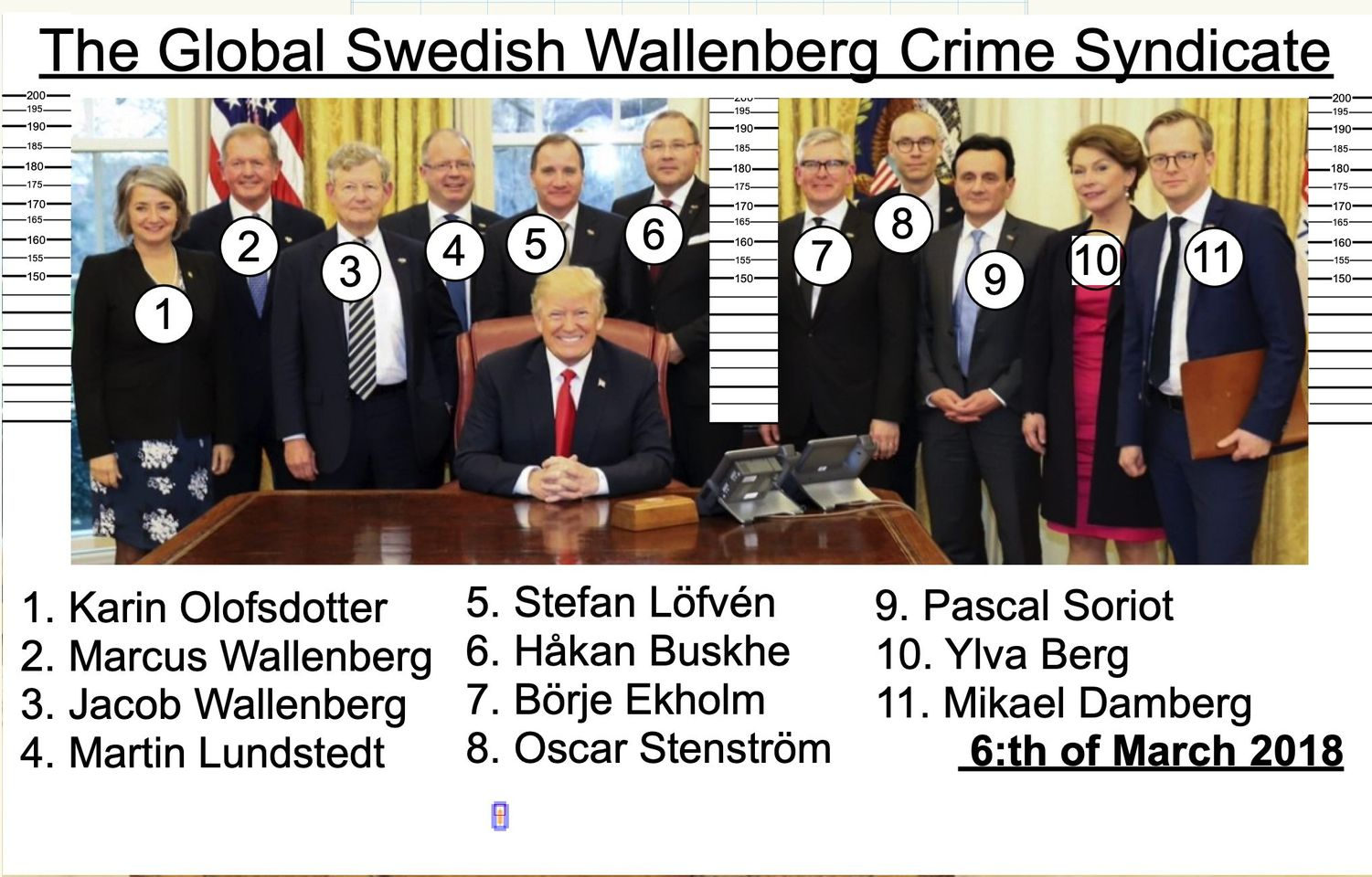
These concerns are not based solely on speculation. Jacob Wallenberg met with President Donald Trump during Prime Minister Stefan Löfven’s visit to the White House in March 2018, where Swedish business leaders discussed major economic and trade issues directly with the President.
The Wallenberg sphere has also maintained close involvement in Sweden’s security and NATO-related environment. One particularly notable example is Oscar Stenström, a former Swedish State Secretary responsible for Sweden’s NATO application, who subsequently became a senior adviser within the Wallenberg sphere.
Furthermore, Marcus Wallenberg has been appointed to President Volodymyr Zelenskyy’s International Advisory Council for the Economic Renewal of Ukraine, a body intended to advise on Ukraine’s economic reconstruction.
We are concerned that this concentration of economic, political, defence, diplomatic, and institutional influence may create a system in which private interests have disproportionate access to, and influence over, public decision-making.
We therefore believe that the relationship between the Swedish Government and the Wallenberg sphere deserves independent and transparent scrutiny.
We have reason to question whether the Wallenberg sphere has, in practice, acquired influence over Swedish national policy that goes beyond the legitimate influence normally exercised by private businesses and interest groups. Some Swedish citizens have therefore come to describe the Wallenberg sphere as functioning, in effect, as a form of unofficial “shadow government.”
We are not asking you to accept this allegation without evidence. We are asking for the underlying relationships, financial interests, political contacts, lobbying activities, appointments, and decision-making processes to be independently investigated.
Furthermore, we believe that actions and policies undertaken by the Swedish government may constitute serious violations of fundamental rights and, potentially, international law. We ask that these allegations be independently investigated rather than dismissed without examination.
Our concerns include Sweden’s immigration and border policies, the government’s approach to gender and transgender issues, deteriorating conditions and public disorder in some Swedish cities, and what we perceive as the consequences of large-scale immigration from predominantly Muslim countries.
We are also deeply concerned about what we perceive as psychological warfare, intimidation, and other forms of state action directed toward the Swedish population. The Swedish Government and judicial system are putting us in harm’s way through their policies. Criminality, rapes, bombings, and murders are out of control.
These circumstances have led us to question whether Sweden’s democratic institutions are continuing to function in accordance with the principles of constitutional government, individual liberty, transparency, and human rights.
We therefore respectfully request that you, as Commander in Chief, consider whether the United States has any lawful authority or responsibility to assist in ensuring that the rights of the Swedish people are protected and that any credible allegations of unlawful conduct, foreign influence, conflicts of interest, or abuses of governmental power are independently investigated.
We are asking for lawful assistance, transparency, accountability, and an independent examination of the facts.
The World Chambers Federation (WCF) is the forum that connects chambers across borders and it has its own arbitration court dispute resolution. The International Chamber of Commerce is governed by its Constitution, which sets forth the structure of the organisation and how it carries out its work.
The history of chambers movement
The term “chamber of commerce” appeared for the first time, in Marseille, France in 1599.
Today, chambers of commerce exist in almost every country of the world. Chambers are still the most important type of multi-sectoral business organizations in the world. Two basic models prevail: Public law and Private law.
The predominant model in the world is the “private law” or “Anglo-Saxon” model originated in Great Britain and spread to other countries influenced by the British tradition. It is also prominent in the Nordic countries. Reflecting the more “laissez faire” economic policies of these nations, chambers are established by the desires and needs of their local business community.
These chambers are not created and governed by public statutes, but are established under private law requiring only registration in business or association registers. Private law models are found in Great Britain, other countries of the British Commonwealth, North America, Scandinavia, Belgium and Switzerland.
ICC International Court of Arbitration®
ICC perform an essential role by providing businesses, governments and individuals with a variety of customisable services for every stage of their dispute.
Although called a court in name, we do not make formal judgments on disputed matters. Instead, we administer arbitrations by exercising judicial supervision of arbitration proceedings.
Rules and Procedures
The ICC Arbitration Rules are used all around the world to resolve disputes, administered by the ICC International Court of Arbitration®, the world’s premier arbitral institution. The Rules assure parties of a neutral framework for the resolution of cross-border disputes.
Court Members
Members of the Court are appointed for three-year terms by the World Council. This is done on the proposal of one member from national committees and other groups.
The President of the Court is elected upon recommendation by the ICC executive board on the proposal of an independent selection committee.
Vice-Presidents are appointed on the proposal of the President.
Court members are appointed on the proposal of ICC national committees and groups, while alternate Court members are appointed on the proposal of the President.
Supreme Board of Directors of ICC
ICC Sweden’s executive board consists of people who represent different parts of Swedish business life.
Chairman: Chairman Fredrik Persson, Business Europe, JM, EllevioVice Vice Chairman: Director Anna Karin Hatt, National Farmers’ Federation Cash manager: Chairman Marcus Wallenberg, SEB
Marcus “Husky” Wallenberg, born 2 September 1956
What is the global footprint of the WCF?
Our members are in 116 countries/territories, from all regions of the world and are the key players in the work of ICC World Chambers Federation.
Marcus “Husky” Wallenberg
Swedish banker and industrialist. Married to Fanny Sachs, sister of Daniel Sachs who sits on the board of George Soros’ Open Societies Foundation.
Marcus Wallenberg was born on September 2, 1956, in Stockholm, Sweden.[ He is a member of the prominent Wallenberg family. His father, Marc Wallenberg, was a banker. His mother is Olga Wehtje. Her father Walter Wehtje was between 1940 and 1957 CEO of Atlas Diesel, which later became Atlas Copco. He was also a board member of Stockholms Enskilda bank. Olga Wehtjes sister is Eva Lundin was married to Adolf Lundin who funded WEF World Economic Forum. Lundin oil are currently on trial for crimes against humanity in Sudan.
Page 9: "Sweden's multilateral involvement thus began early and this is a contributing reason why it has been so successful, not least for the Riksbank. Through international lobbying and a lot of luck, for example, the Riksbank managed to become a partner in the world's first multilateral financial institution, the Bank for International Settlements (BIS), right from its inception in 1930, and since 1931 the Riksbank has been represented on the board, see Rooth (1930) and Sweden's Riksbank (1930). As we will see, the value of this can hardly be overestimated, either for the Riksbank or for Sweden."
In 1933 the Bank for International Settlements appointed as an Arbitration Committee, Messrs. Marcus Wallenberg (Chairman), T. H. McKittrick, Jr., and Franz Urbig. When the Standstill Agreement expired under its terms on February 28, 1932, and was thereupon renewed for another year, the same Arbitration Committee was reappointed, with the addition, as alternates for the members, of Messrs. Carl Trygger, G. Tyser, and Robert Pferdemenges.
Marcus Wallenberg Sr.
In 1890, Wallenberg became ombudsman for Stockholms Enskilda Bank (SEB) and from 1892 belonged to the bank's executive board. He became vice chairman of the board of SEB in 1920 and then served as its chairman from 1938 until his death in 1943.
In 1920 he became a member of the League of Nations' newly established Financial Committee, of which he was chairman from 1921 to 1922. In 1921, Wallenberg founded the Swedish Taxpayers' Association. Wallenberg participated in leading positions in the implementation of the Dawes Plan, and was the sole permanent arbitrator in disputes concerning the interpretation and application of the law, the financial burden on German industry and was a member of the permanent arbitration tribunal for disputes concerning the Dawes Plan application.
As the chairman of the arbitration committee of BIS Marcus Wallenburg Sr. asked Cassell to recommend a Swede to join the Secretariat of the League of Nations, forms UN, he suggested Per Jacobsson. He was offered the post by Marcus Wallenberg Sr. and accepted it.
Ivar Kreuger and the Kreuger crash
(After leaving the League, Per Jacobsson returned to Sweden and worked from January 1929 to July 1930 at the Swedish Economic Defense Commission which was studying preparation for the eventuality of another war, and then from July 1930 to September 1931 as Economic Adviser to a Swedish industrial company, Kreuger and Toll.
Kreuger & Toll was a construction and holding company founded on May 18, 1908, by two Swedish engineers, Ivar Kreuger duck Paul Toll, with Henrik Kreuger working as a consultant and chief engineer.
Ivar Kreuger's suspicious death precipitated the Kreuger Crash which hit investors and companies worldwide, but particularly hard in the United States and Sweden. Ivar Kreuger shot himself in the head when he "committed suicide" in his office in Paris on March 12, 1932.
Ivar Kreuger, 2 March 1880- 12 March 1932 (aged 52)
Following the Kreuger crash, both the debentures and shares became worthless, and several thousand Swedes and small banks lost their savings and investments as a result. Large investors and suppliers apart from share holders, received a total of 43% back.
The banks related to the Wallenberg family company group, Stenbeck company group, etc Handelsbanken took over most of the companies in the Kreuger empire. Swedish Match recovered shortly after the crash as did most of the industrial companies within the Kreuger empire. Swedish Match received a large government-guaranteed loan that was fully repaid after several years. IMCO in US however did not survive. The liquidation took nine years and was eventually finished in 1941.
Per Jacobsson and BIS
From early on, the BIS developed its own research in central banking and finance under the dynamic guidance of its first Economic Adviser, the Swede Per Jacobsson (1894-1963), and started collecting financial and banking statistics. The BIS research found its way into the Bank's Annual Report, which soon established itself as a leading publication in its field.
In December 1956, he was appointed as the managing director of the International Monetary Fund (IMF), a position he held until his death on 5 May 1963.
As a consequence of the Great Depression of the 1930s, the repair issue quickly faded. The German financial and banking crisis of the summer of 1931 led first to a one-year moratorium on reparation payments (Hoover Moratorium of July 1931) and subsequently to their complete cancellation (Lausanne Agreement of July 1932).
With the reparations issue out of the way, the BIS focused its activities on the technical cooperation between central banks (including reserve management, foreign exchange transactions, international postal payments, gold deposit and swap facilities) and on providing a forum for regular meetings of central bank Governors and officials.
Of these meetings, the regular Board meeting weekends, which brought together the Governors of the main member central banks, were the most important (in the 1930s, the BIS Board consisted of the Governors and their alternates of the National Bank of Belgium, the Bank of France, the German Reichsbank, the Bank of Italy, the Netherlands Bank, the Swedish Riksbank, the Swiss National Bank and the Bank of England, as well as representatives for the Bank of Japan).
Wallenberg has their own arbitration court
The SCC has always been independent. We were founded in 1917 as an independent entity within the Stockholm Chamber of Commerce and have worked without commercial or political interests ever since. This forms a key part of our history, but it is also important as we look to the future.
The Per Jacobsson Foundation was established in 1963 to carry forward the work of international cooperation in the monetary and economic field to which Mr. Jacobsson had devoted his life. The institutions with which he was closely associated for over 30 years – the Bank for International Settlements and the International Monetary Fund – participated in this endeavour. The establishment of the Foundation had the full cooperation of Per Jacobsson's family, and was widely supported, as reflected in the list of the original sponsors.
Marcus Wallenberg is Director and Founding Honorary Chairmen and the Per Jacobsson Foundation